Chicken Tax | Solo Exhibition by Chelsea Couch
Nov 1 – Nov 22 | Opening Reception November 1st, 1pm–9pm
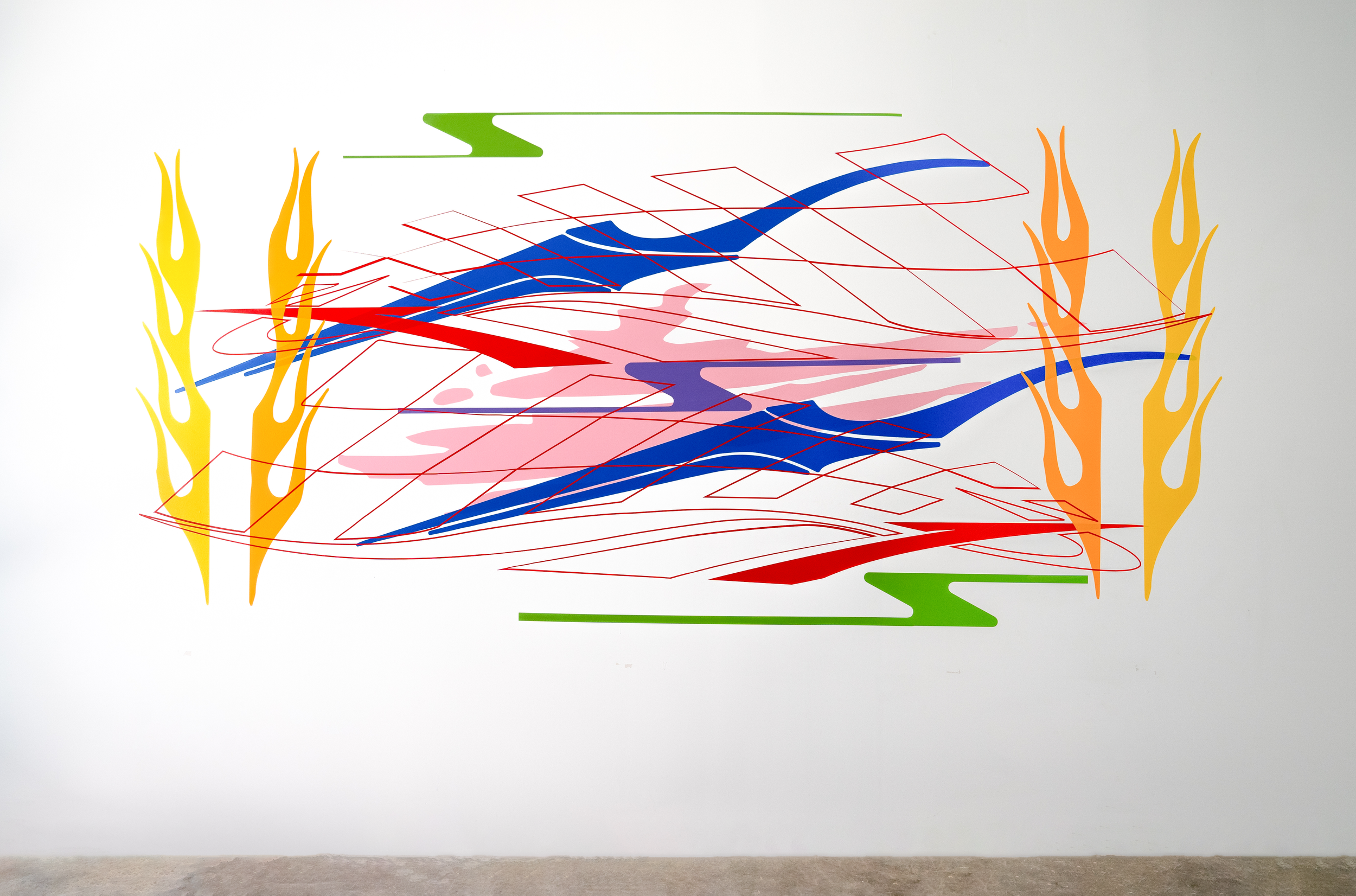
Customization #2, Adhesive Vinyl, 12’x6’, 2024
COOP is pleased to present Chicken Tax by Chattanooga-based artist Chelsea Couch. Chicken Tax explores themes, materials, and objects that conceptually connect to fragile masculinity and the gendered truck in its relation to the artist's socialization in Southern Appalachia as a trans person. In Chicken Tax, Couch brings together work that pushes the bounds of this exploration into the gendered truck, its role as a working body, and the relation between custom culture and gender-affirming care. An unoccupied auto dealership wedge ramp provides an axis to consider probing questions often directed at the trans community by conflating them with a consumer’s desire to gander at an underbody and examine the mechanics of an automobile, considering its innards in relation to its market value. Aftermarket decal-inspired murals provide a seductive draw towards auto body customization, considering how our vehicle is an extension of our bodies and how we often alter that body to better align with our sense of self. Hoisted into the air, a symbol for masculine courage and dominance is rendered in a fractured state alongside its lacking void and without a stable referent.
Please join us on Saturday, November 22nd at 1pm for an artist talk.
More about the Artist
Chelsea Couch (b. 1990 Chattanooga) is an artist & educator. They received a BFA from The University of Tennessee at Chattanooga and an MFA from University of Oregon. Couch was a former co-executive and artistic director of Ditch Projects and is currently a Lecturer at The University of Tennessee at Chattanooga & Programs Director at Stove Works. They are based in Chattanooga, TN. Chelsea Couch’s work leans into the human desire for material seduction, poetic beauty, and being brought in on a joke. Working across Sculpture and Time-Based Practices, they explore material choices which often create discordance within a cultural reference. Mutable materials create a throughline in their practice, considering social and geologic timelines as inspired by their experiences as a trans person. Materials and processes vary between projects, while the formal and conceptual concerns of their work remain situated within decolonization, safety and security in late-stage capitalism, and post-gender embodiment.